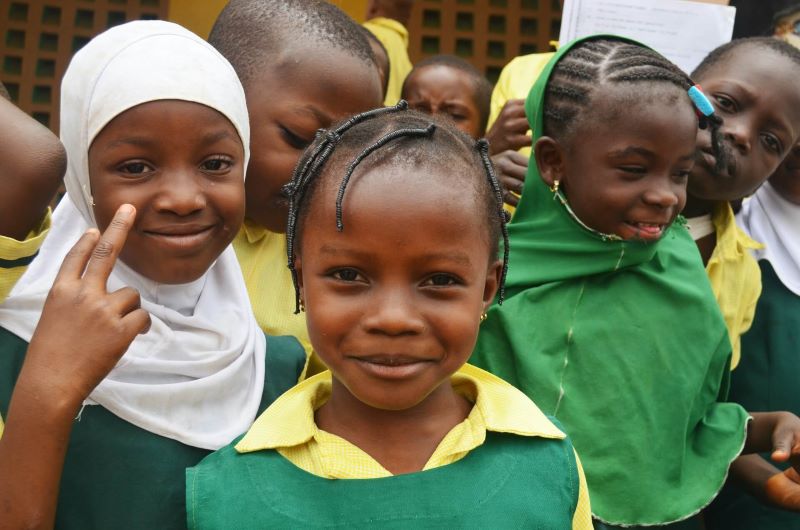
Millions of secondary school girls in Africa are either leaving school or not even getting a chance to start school. This is the harsh reality which Africa is facing as revealed by the World Bank in a recent report. World bank reports that about 34 million adolescent girls in Sub-Saharan Africa are out of school. This number is staggering especially considering all the global efforts aimed at getting more girls in school and keeping them there until they graduate. So, what could be the issue(s)?
In a bid to understand why the numbers remain high in spite of the efforts aimed at their reduction, many reasons have been given. These reasons have been described as both complex and connected. One reason, however, which has continued to stand out as the biggest challenge to the education of secondary school girls in Africa is poverty.
Poverty and Economic Hardship: The Biggest Barrier to Education
For many families, putting food on the table is a daily struggle. When you add school fees, uniforms, and books into the mix, educating a child—especially a girl—can feel impossible. In tight financial situations, parents often make heartbreaking choices. Studies, including those by UNICEF, show that boys are more likely to be sent to school because they’re seen as future breadwinners.
Meanwhile, girls are viewed differently: often as an economic burden or even as helpers around the house. So when money runs out, girls are usually the first to be pulled from school. It’s a cycle that keeps families and communities stuck in poverty, limiting the potential of half the population.
We All Have a Role to Play
Against the backdrop of the saying, “if you educate a man, you educate an individual. But if educate a woman you education” , it is clear to see that this situation isn’t just a statistic. It’s a crisis that impacts families, communities, and the future of the continent. But it’s also an opportunity for change.
Goal 4 of the Sustainable Development Goals, —is all about ensuring that everyone has access to quality education. To get there, we would need to tackle the barriers that specifically hold girls back.
Thankfully, organizations like the World Bank and UNICEF are already playing a huge role in this area. Through offering solutions like cash transfers and scholarships to help families afford education for their daughters, they provide financial support directly to households to reduce the burden of school costs.
We Can Make a Difference Together
Here at the Educational Foundation for African Women (EFAW) we understand this challenge deeply. Driven by our commitment towards promoting girl child education in Africa, we support families by covering external examination fees. We also provide scholarships to girls who might otherwise be forced to leave school. We know we can’t do it alone so we aim to build enduring partnerships with other NGOs /non profits so we all can together create a lasting impact . We equally solicit support from well-wishers and all devoted to
Education is the key to opportunity, empowerment, and growth. It is more than just going to school. Every girl who stays in school is a glimmer of hope for a better Africa.